

Maisie Lloyd
Maisie is the Digital Content Manager at Intelligency, handling all things creative for the agency. Her experience centres around the production of digital content, pertaining to graphic design, writing copy, and video and audio content.
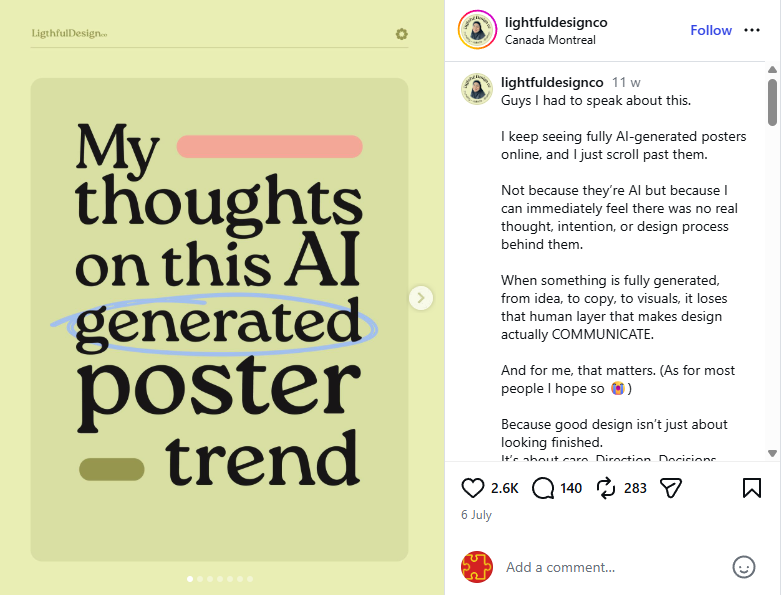
AI has its applications, but recently, more and more AI-generated menus, posters, and marketing materials have been cropping up. This has led to many online and offline comments about a lack of creativity, inaccurate representation, and a generally lazy approach to asset creation.
The core issues with AI-generated content
Beyond customers disengaging from AI-generated assets, there are several issues that are apparent with this approach. The key one is creative opportunities being taken from skilled designers, photographers and copywriters. Outsourcing content creation to AI snubs very capable content creators out of work.
So why is this an issue? Well, aside from the lack of work, it also raises issues around quality, styling, and effort. All of which creatives provide when designing marketing materials.
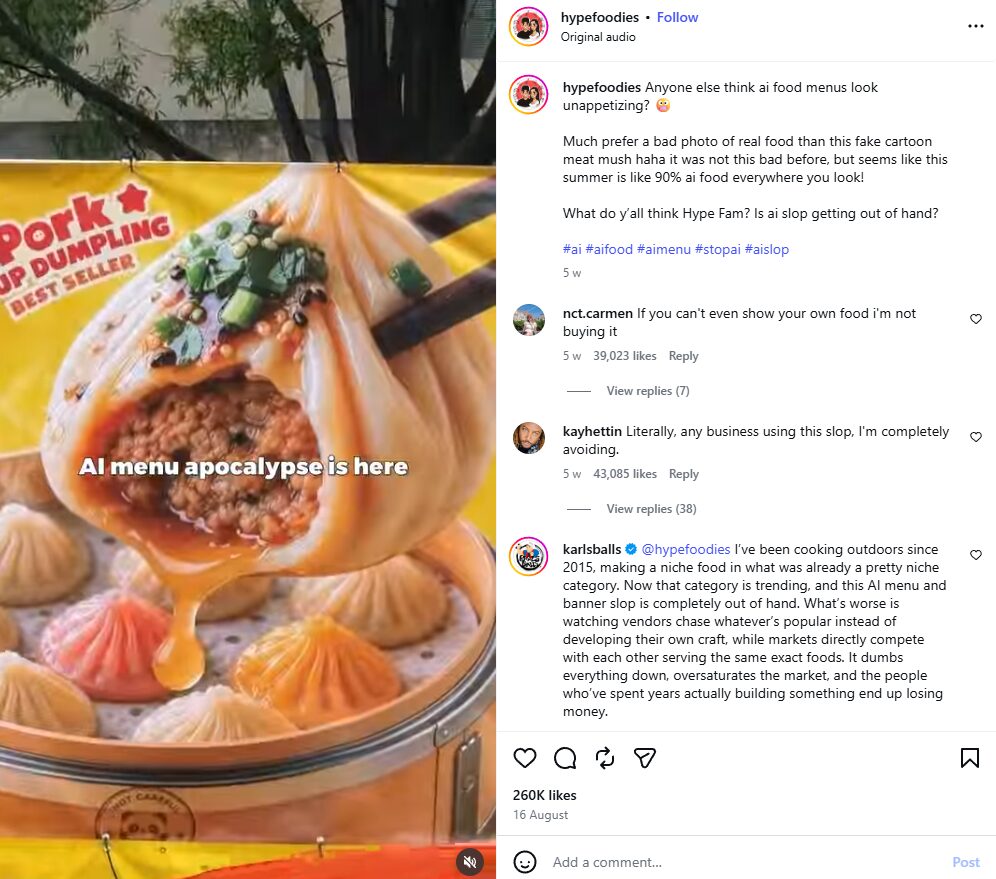
Other issues that present with AI-generated designs are the inconsistent quality. We observe a lack of textural accuracy with things like food items, with burger buns looking ultra shiny, burger patties looking bumpy, poorly coloured, and just generally not like food. Proportions are off, the colour palettes are often entirely different from the products, and “creative” liberties are taken with the overall styling.
What it highlights is the need for accurate media materials, especially when marketing materials like food menus are being distributed. There’s an art to food photography, which is excellent for inducing cravings and highlighting the nature of food. Think splashing drinks, dripping sauces, bites from food, which actually look like they’ve come from a person. These particular stylings help to sell a product, and AI rarely gets it right.
A key issue around AI-generated content, which we are yet to see the fallout for, is the fact that these engines will utilise training assets to develop designs. This could result in copy being plagiarised, designs verging on copyright infringement, and IP being stolen and repurposed for a cheap and quick solution.
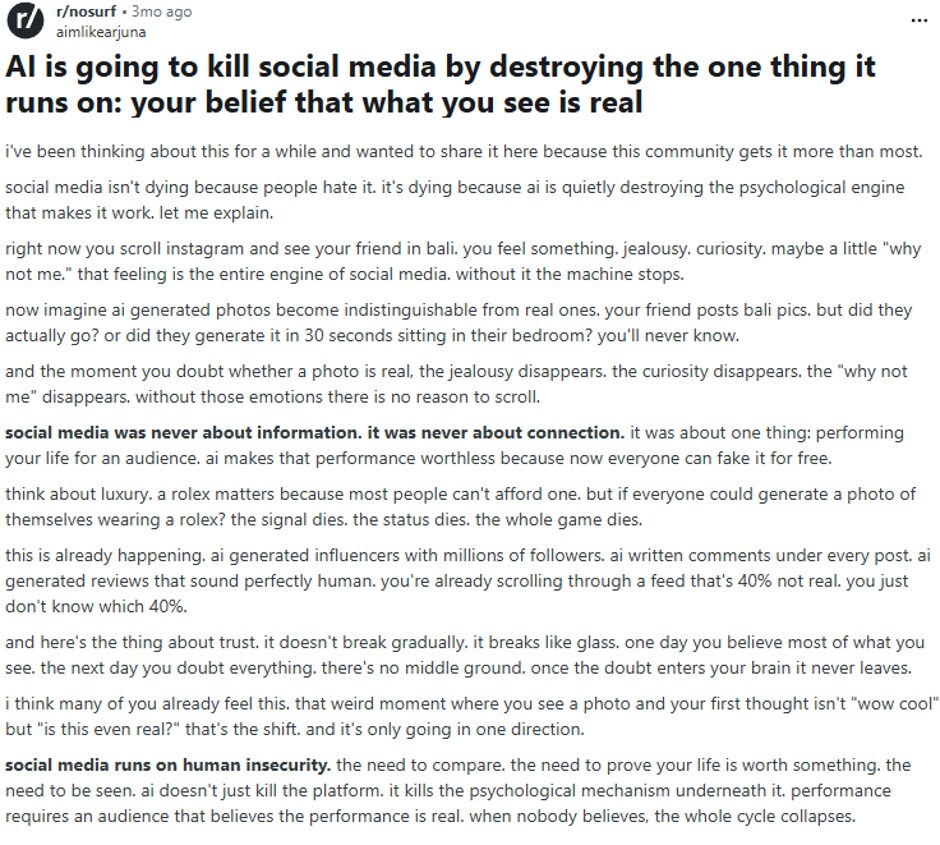
Each compounded issue can very quickly erode the trust of customers, especially without explicit labelling that AI has been used. A core value of a great business is transparency, and without that, customers can be left wondering and assuming what else is disingenuous about the business.
Why do AI-generated assets bother customers?
As we touched on, distrust is a core problem raised with AI use. In addition to distrust, AI-slop can make customers feel:
- Like the materials don’t align with their experience, with the expectation versus reality causing a strong response and dislike.
- Feeling misled in their decision, whether that’s from inaccurate copy or added ingredients in generated food images.
- The erosion of the human experience; it’s like a chain reaction of distrust. If the menu is AI-generated, then what will be next? People want human experiences to be at the forefront of their experience, not being led by AI, which feels cold and lazy.
An insight into the audience’s response
We see a number of users across channels showing the same disdain for AI-generated content.
Keeping the Human Element in Marketing
AI can offer businesses useful ways to streamline content creation, but the quality and authenticity of the final result still matter. When marketing assets feel disconnected from the real product or experience, they can affect how customers perceive a brand.
Human creativity, expertise and attention to detail remain valuable in creating content that accurately represents what a business offers. By using technology alongside these skills, rather than allowing it to replace them entirely, businesses can benefit from greater efficiency without losing the human element that customers connect with.