
Maisie Lloyd
Maisie is the Digital Content Manager at Intelligency, handling all things creative for the agency. Her experience centres around the production of digital content, pertaining to graphic design, writing copy, and video and audio content.
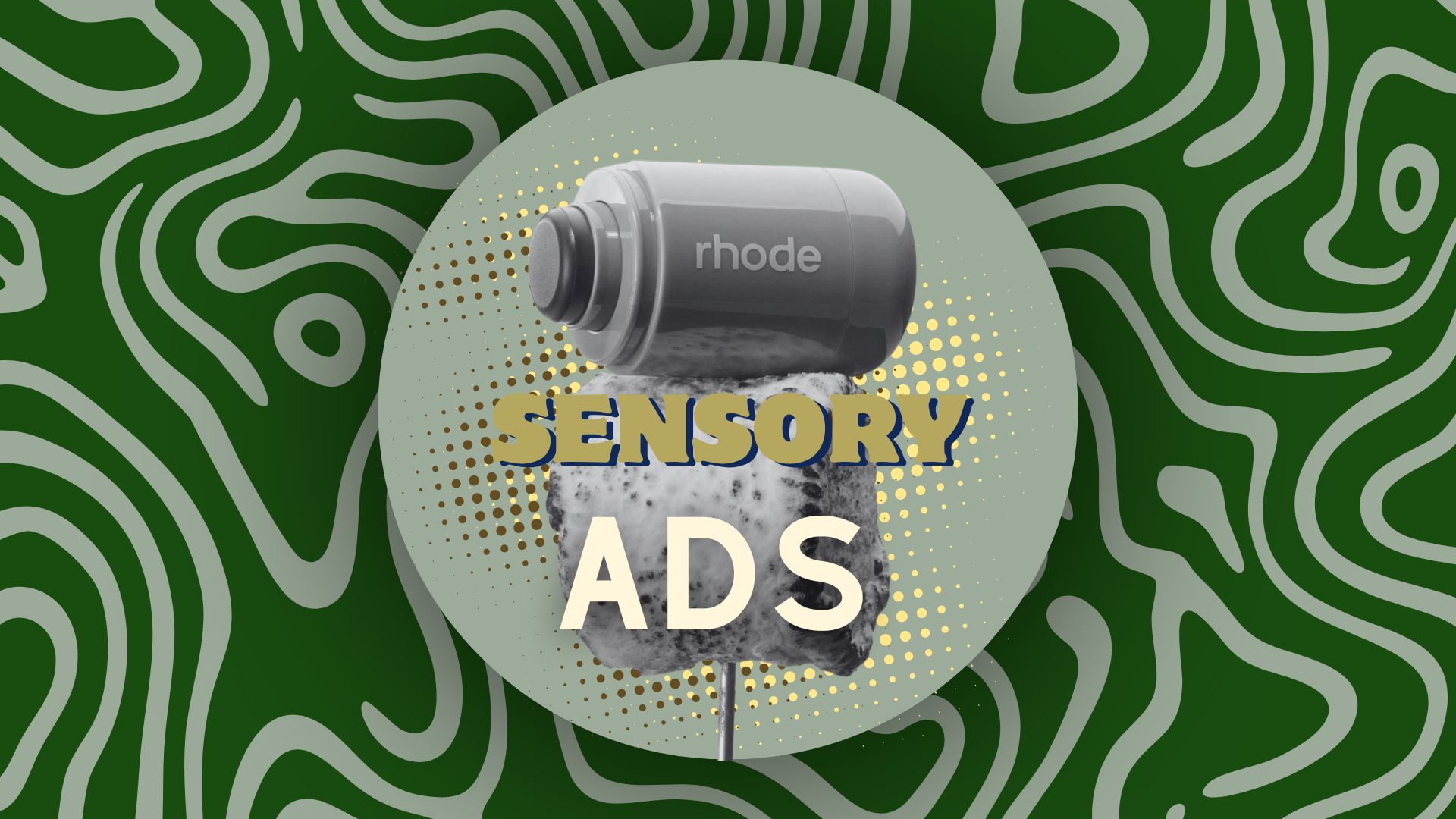
Sensory advertising is a particular type of advertising which appeals to more than just one sense (vision). Whilst it can be effective, its use has to be considered, for some industries, sensory advertising is misaligned with the offering. This would be particularly applicable for B2B, Software as a service (SaaS) and finance companies.
Some sectors, however, excel because of the sensory advertising they produce. Think fashion, food and travel. All of which naturally dominate the sensory ad space, and rightfully so.
The issue isn’t about execution; it’s about the context of the sector and the appropriateness of the sensory exploration.
Industries that naturally align with sensory advertising
Fashion and beauty
These industries thrive on the fact that identity plays a key role in consumer behaviours and engagement. The applications of these products are centred around a strong connection to touch, movement and self-perception. All of which are what make sensory representation in advertising effective.
This creates an opportunity for campaigns to feel tactile, mirroring the physical experience of the product itself. Beauty campaigns often lean into literal sensory cues, such as water, oil, skin, and light, to visually reinforce claims such as hydration, smoothness, or glow.
Similarly, fashion campaigns utilise all aspects from production to styling, capturing not only the style but the feel of the product. The result is advertising that doesn’t just showcase a product but allows the audience to imagine themselves wearing it.
Food and beverages
Food and drink campaigns are able to appeal beyond what the person sees, tapping into the memory and craving of the watcher by representing taste and smell.
Often, this category of ad content sells because of pre-existing experiences. It works by triggering memories of existing experiences, which can be highly impactful for creating successful drink and food campaigns.
Why it works for these industries
Sensation matters for these brands. It’s not about selling the audience something they don’t know or convincing them to buy it. It’s about reinforcing memories around sensations that provoke cravings and subliminally place positive memories of the product in the individual’s mind.
Audiences can easily imagine how the product feels, tastes, or moves, allowing ads to trigger emotional recall instead of explaining functionality.
It creates emotion-led decision-making for consumers. Purchasing decisions are driven by a wanting for something. These industries prove campaigns can be about more than appealing to logic; it’s about emotion.
Industries That Struggle with Sensory Advertising
The type of rapport businesses like B2B and finance companies have with their customers is fundamentally different. Using sensory-based campaigns doesn’t align with these sectors because of the complexity, risk and justifications that need to be made to make it feel authentic.
When sensory advertising is used improperly, it runs the risk of feeling distracting and disingenuous. This can create a disconnect between customers and the brand.
Some of the ways these industries can look to incorporate sensory advertising is by focusing on the messaging that supports the sensory content. Utilising calm motions instead of high-energy, action-based shots. Language that evokes trust, clarity and stability is key for helping other sensory cues feel contextualised rather than becoming an overwhelming out-of-touch aspect of a campaign.
Sensory Fit: Why Sector Context Matters
· Sensory advertising is only effective when it aligns with how audiences already experience a product or service.
· In sensation-led industries, sensory cues reinforce memory, craving, and desire rather than explain functionality.
· Trust-driven sectors require sensory restraint — cues should reassure, not distract.
· Calm motion, considered pacing, and confident language build credibility where risk and complexity are high.
· Sensory impact is driven by contextual relevance, not creative ambition alone.
· Industries like travel, fashion, and food succeed because sensation is intrinsic to the product or experience itself.
Sensory advertising works best when it feels natural, not forced.
It succeeds when it mirrors how audiences already engage with a category and fails when it ignores the emotional context that surrounds it.
Understanding sensory fit allows brands to move beyond imitation and design campaigns that feel credible, intentional, and human. In an increasingly crowded creative landscape, relevance, not stimulation, is what cuts through.