
Maisie Lloyd
Maisie is the Digital Content Manager at Intelligency, handling all things creative for the agency. Her experience centres around the production of digital content, pertaining to graphic design, writing copy, and video and audio content.
Nostalgia marketing is a key tactic used to tap into emotional and resonant memories from the past. When used effectively, it can bring feelings of joy or contentment; this familiarity that’s established helps to reinforce trust and authority.
What Can Make Nostalgia Marketing So Effective?
Creating feelings of nostalgia is a technique which taps into culture, emotion, identity, social connection and even moments of escapism. By creating a moment for viewers to reminisce, brands are able to effectively make the audience engage, which can help with their effort to strengthen emotional bonds and influence purchasing decisions.
Utilising nostalgic elements is particularly effective for prompting emotional engagement; it often helps brands stand out in oversaturated markets. People are more likely to engage with and invest in something which creates this kind of response.
When a campaign is able to successfully connect to existing memories, the recall of messaging, helping to forge trust. Rather than the viewer creating a new association, it is associated with memories consumers already have.
Familiarity often prompts people to discuss the past, which encourages viewers to share and engage with campaigns. This not only helps improve reach, but it also improves brand awareness and recognition. This type of engagement helps create social proof. Consumers engaging with it in this sense implicitly signal that it’s worth paying attention to.
When Doesn’t Nostalgia Marketing Work?
Whilst it can be powerful, this tactic isn’t automatically effective. This can happen when the nostalgic element overwhelms the messaging, isn’t aligned with the offering, or lacks relevance to the audience. For instance, what may be nostalgic for a millennial may not land at all for a Gen Z consumer.
The most common causes for nostalgia-based campaigns not working include:
- When the campaign feels forced
- Seeming inauthentic
- It conflicts with the brand’s position
- The nostalgia factor overshadows the product
- People’s unique experiences and responses
- Potentially overused or tired product campaigns
Key Examples of Successful Nostalgia-Based Marketing Campaigns
Some key examples of when it’s been done right include Argos’ “toys” campaign. McDonald’s adult Happy Meal product campaigns, along with Cadbury’s 200-year celebration of the brand.
‘There’s more to Argos than toys’
Argos’ latest campaign draws on nostalgia through clever visual references. Using everyday items like fridges and sofas in bold packaging reminiscent of children’s toy boxes, the campaign reminds people that Argos is more than just a place to buy toys.
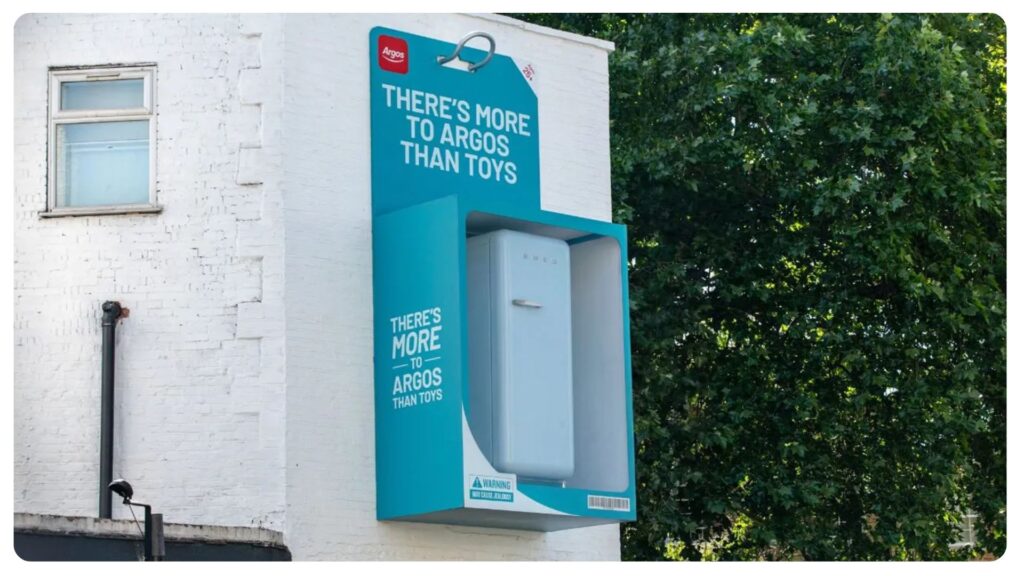
For readers who grew up in the generation of catalogues, the throwback to getting toys from Argos is a fond memory. I too grew up circling the ideal toys for my Christmas list, so seeing this campaign puts a clever spin on how brands grow alongside their audience.
The campaign cleverly reminds passers-by that Argos stocks far more than what’s in the toy box, reinforcing the message that “there’s more to Argos”.
Cadbury’s Celebrated 200 Years of Business
Arguably, one of the best campaigns for its nostalgia factor was Cadbury’s 200-year celebration, which saw packaging revamped or, more fittingly, pulled back in time through the revival of its historic designs.
The TV advert produced alongside the campaign perfectly matches the nostalgic feel. It sets the scene at the advent of the Dairy Milk bar before transitioning into a present-day setting, showing that whilst times may have changed, consumer buying habits and emotional connections to the brand remain the same.
McDonald’s Adult Happy Meals
Whilst McDonald’s hasn’t explicitly marketed its adult meals as “Adult Happy Meals”, many of us who grew up pleading with our parents for a Happy Meal will recognise the same sense of excitement through its recent promotional releases.
Initially, it was the Grinch collaboration that sparked excitement. Customers could order a Grinch meal, featuring adult-sized products accompanied by a free pair of socks. This was then followed by the Friends x McDonald’s collaboration, where consumers were able to collect one of six figurines of the characters. Now, the excitement continues with the announcement of a new cup release for the FIFA World Cup.
The latest “Adult Happy Meal” taps directly into 2000s nostalgia through the return of the collectable Coca-Cola glasses, something that seemed to exist in every British household.
The campaign is particularly effective because it taps into the positive emotions attached to nostalgic purchasing experiences, reminding consumers of the excitement and familiarity associated with childhood treats and collectables.
Nostalgia is most effective when it supports a brand’s message rather than replacing it. While nostalgic campaigns can build emotional connections, trust, and engagement, they can fail when they feel inauthentic, target the wrong audience, or rely so heavily on the past that consumers lose sight of the product itself. The most successful campaigns use nostalgia as a bridge between meaningful memories and a compelling modern brand story.