
Maisie Lloyd
Maisie is the Digital Content Manager at Intelligency, handling all things creative for the agency. Her experience centres around the production of digital content, pertaining to graphic design, writing copy, and video and audio content.
OpenAI have begun the rollout process of ads across its AI generative engine, ChatGPT. Users in the UK were prompted to select whether they wanted tailored ads based on the collected data from previous prompts or generic ones.
How can brands secure ad space on ChatGPT?
The sign-up process for marketing campaign ads on ChatGPT prompts users to create an account and provide basic business details. Then, once the account is live, you’ll need to follow this process to upload your campaign:
- Create a campaign
Setting up a campaign is done within ChatGPT’s ads manager. This provides controls around goals, which are the desired reach and clicks. Once set, you’ll then input the campaign name, your budget, the start and end dates, as well as toggle the targeting settings to your preference.
- Create ad groups
Ad groups are designed to provide conversion context hints. Allowing you to position campaigns by contextual relevance rather than utilising keywords like Google Ads would.
Within the ad groups, there are additional controls on bidding settings and in certain cases, audience parameters are also available.
- Start producing your ads
Unlike a Google, Meta or LinkedIn ad campaign, the actual result achieved greatly differs. Ad managers need to paste in a headline, description and the landing page URL.
The key difference is the asset; while a traditional style campaign image can be used, it’s often better to use a high-resolution logo or photograph, as the display size is modest and will need to be legible to users.
- Upload campaigns in clusters
ChatGPT is fitted with capabilities to support multiple campaign uploads.
The workflow is:
- Download your campaigns template.
- Fill in all of your campaign, ad group, and ad information.
- Upload the completed file through Ads Manager
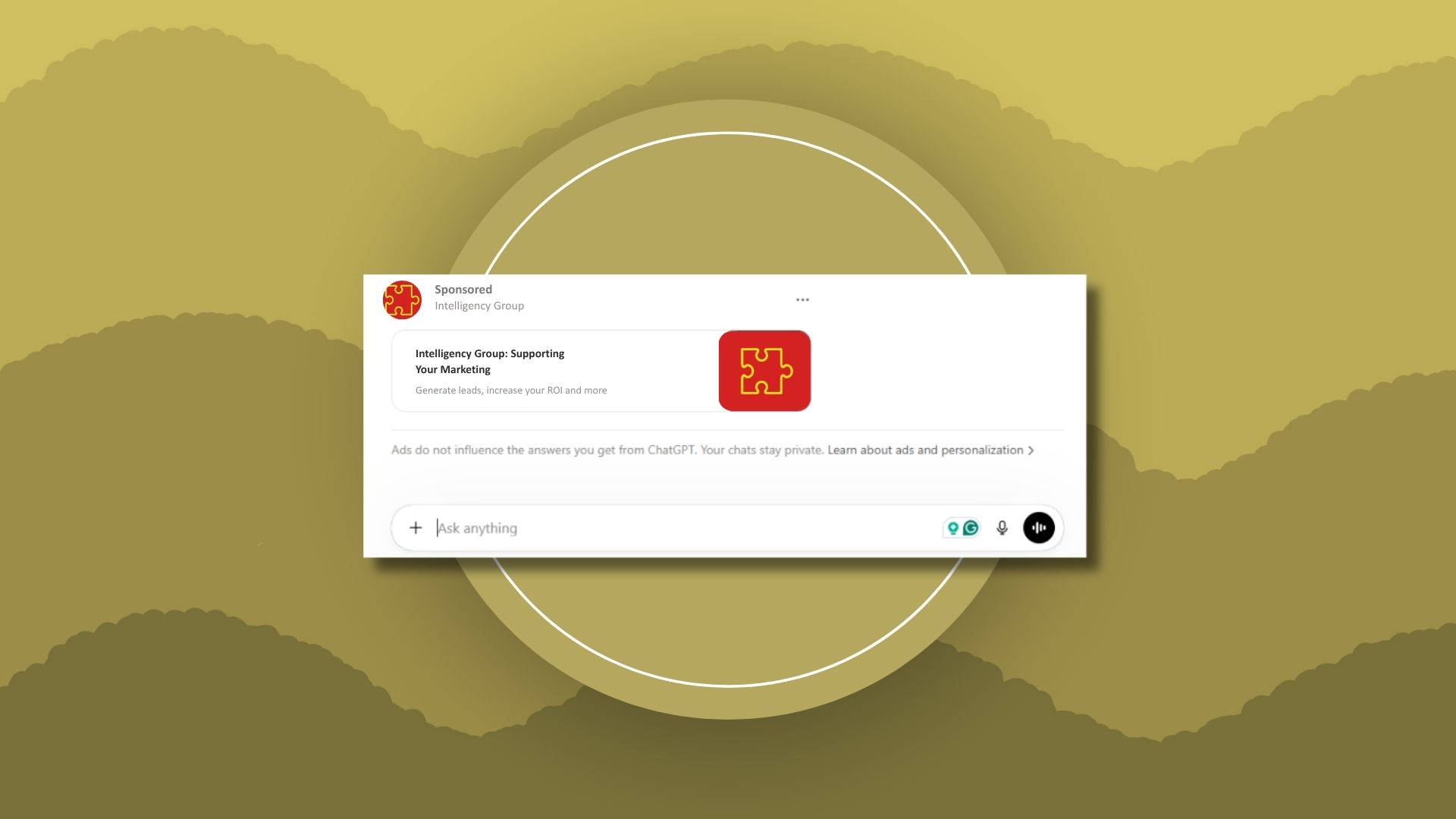
What do the ads on ChatGPT look like?
Each campaign is displayed just above the text box, positioned below any search results.
How will UK regulation impact advertising on ChatGPT?
There are a number of regulations that will impact both the user experience and campaign managers. EU regulations and policies stipulate:
Consent requirements in the EU mean users must provide consent before their personal data can be used to personalise advertising. If users choose not to opt in, advertisers may need to rely on contextual targeting or generic advertisements instead.
Restrictions on the types of campaigns allowed. EU regulations place significant restrictions on the use of sensitive personal data for advertising, profiling of children, and certain forms of political advertising. As a result, advertisers face tighter controls over how campaigns are targeted and delivered compared with many non-EU markets.
As ChatGPT continues to evolve from a conversational AI platform into an advertising channel, brands are being presented with a new opportunity to reach users in highly contextual environments. While the platform’s advertising capabilities are still developing, its emphasis on conversational relevance rather than traditional keyword targeting could reshape how marketers approach campaign planning. However, with increasing regulatory scrutiny around privacy, personalisation and AI-driven advertising, businesses will need to balance innovation with compliance as they explore this emerging marketing channel.