
Maisie Lloyd
Maisie is the Digital Content Manager at Intelligency, handling all things creative for the agency. Her experience centres around the production of digital content, pertaining to graphic design, writing copy, and video and audio content.
What is and when is black Friday?
Black Friday happens each year on the Friday following Thanksgiving. Aptly named by Philadelphia police in the sixties for the chaos that ensued as city dwellers and tourists took to the streets, causing carnage and chaos, they shopped to their hearts’ content.
This year it falls on the 28th of November.
Black Friday has since evolved, with businesses and brands capitalising on the notoriety of the event. It’s become of commercial importance as a holiday; it signifies the start of Christmas shopping, which ultimately is the time when retailers see a significant increase in profit.
Should my business run a black Friday campaign?
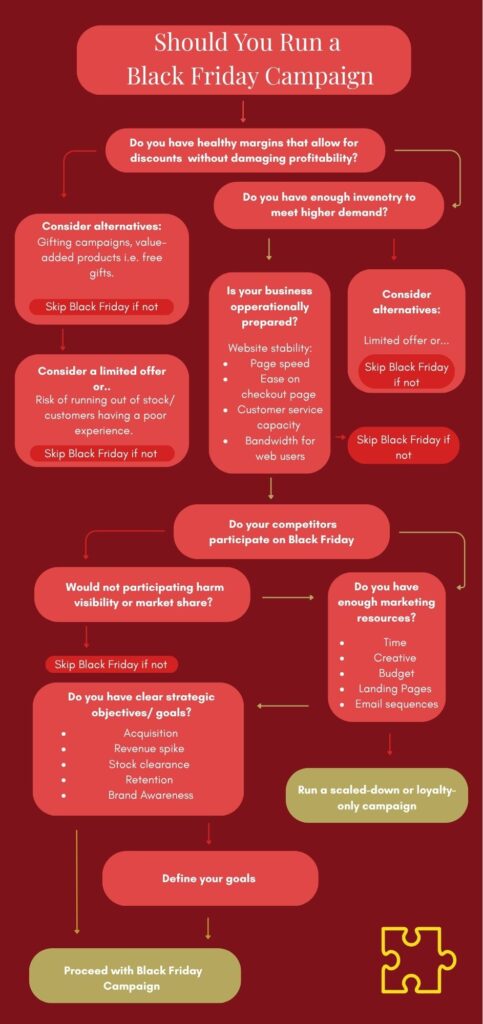
Considering whether a business should run a black Friday campaign can be difficult, but there are several strategic, operational and financial factors to think through before creating a Black Friday campaign, which include:
- Product/ inventory reality: Can it be discounted? Do you have enough stock? Is your business logistically capable of selling something on a large scale if it’s needed?
- Your business model: If you sell B2C, then this is less of a concern, but if you’re a small business with a B2B model, then you may find that it’s less suited.
- Being technically prepared: Is your website built to accommodate high levels of traffic? Have you checked that the checkout process is smooth and efficient for the customer? Making sure the process is as easy as possible for the customer increases the chances of driving conversion.
- Competitive landscape: Are your competitors holding campaigns? Do you need to keep up with the competition and remain visible within your industry?
- Audience fit: Will your audience be motivated by a promotion? Have they previously responded to promotions?
- Luxury brands risk devaluing their positioning
- B2B companies often see less demand for tactical promotions
- High-trust or relationship-based services may not benefit from aggressive price cuts
- Customer experience: Customers on the receiving end of a poorly functioning site, bad deals, and confused messaging are likely to have a poor experience.
- Strategic alternatives: Some businesses benefit from taking a step back and capitalising on different holidays/occasions. Holiday campaigns face the risk of over-saturation to begin with, so taking a step back and focusing on Christmas or the January sales can be an effective way to
When should my Black Friday campaign start?
Picking the right time to launch your Black Friday campaigns is almost as essential as the messaging and assets. If timed correctly, a campaign can capture the curiosity and attention of existing and potential customers.
Begin the soft launch of your campaigns in late September or early October. This can be done simply, with an email hinting at what’s to come. Create intrigue for existing customers with things like early access to products or exclusive early-bird discounts.
Mid-October is when we recommend ramping up the messaging on exclusivity and deals. It’s the perfect time to capture your warm audience and create some buzz around the event.
As November rolls around, this is the point of intensity where leads are being nurtured with follow-up emails. It’s a great time to commence a countdown for your sales, again reiterating the limited time left until Black Friday and the exclusive shot-time deals available to customers.
Even after the Black Friday sales are over, give those who have abandoned cart a last chance to snag a deal on the product they want.
The campaign period usually spans around two months, but for some companies it may be as little as a week.
How to design an effective Black Friday marketing campaign?
Emotion, entertainment and relatability are all feelings that drive conversion, whether that’s engagement through a click or a lead that becomes a conversion. Creating a campaign that resonates with the audience is a tactful way to put your brand in the minds of viewers.
A great campaign provokes thought at minimum, and a reaction (i.e. a sale) at most. Think about how you can connect with your audience, whether that’s creating a sense of urgency through ‘last chance’ messaging or using UGC in your campaign to create a sense of relatability from a customer perspective.
Should I create landing pages especially for Black Friday?
If you’ve made the decision to run a campaign, then we absolutely recommend creating a tailored landing page. This allows you to home in on the types of content and visual assets that are more likely to drive conversion.
Striking a balance between urgency and building trust is key for these pages. You want the customer to feel like they can build trust and rely on your company’s honesty.
Using urgency design like countdown banners, is a great way to remind the customer of the time limitations, encouraging them to buy the product before their time runs out. Providing a deadline makes it super clear how long your deal will last, giving the customer an explicit reason to purchase the product.
Make sure the content is benefit-led. Keeping your offering clear and driven is essential; the customer doesn’t necessarily care about the minor details of the product as much as the details of how it’s going to benefit them.
Addressing the customer’s problem without them having to infer how your product/ service helps them slashes the decision-making time for the customer.
How should I measure performance for Black Friday?
There are a number of metrics and measurement techniques that allow you to assess the success of your Black Friday:
- Total revenue generated – This is ideal, especially if you have the metrics from the previous year. It will allow you to measure growth YoY, as well as being able to better forecast the following years.
- Conversion rate – Your conversion rate will either validate the UX of your landing pages, or it will signal an issue. This, coupled with heatmaps, can be an incredible piece of insight for people to see.
- Average order value – Knowing the average order value will allow you to see whether Black Friday sales measure up to the day-to-day performance of the business.
- Return on ad spend and cost per acquisition– Understand the profitability of your campaigns with ROAS. It is a direct way to see how effective your campaign is at generating leads. Cost per acquisition allows you to understand the cost to acquire your leads, which is especially useful for future budget allocation.
- Return rates – A spike in returns can sharply reduce margins — especially in apparel, electronics or beauty.
- Track return rate vs. typical periods.
- Website traffic and session quality – Track:
- Users
- Sessions
- Bounce rate
- Time on site
- Pages per session
These numbers reveal whether the campaign attracted the right traffic and whether your messaging matched expectations.
Final Thoughts
Black Friday continues to be one of the biggest commercial moments of the year, but success isn’t about simply slashing prices or joining the noise. The businesses that truly win are the ones that prepare early, understand their audience, and execute campaigns with intention and clarity. Whether you choose to participate fully, take a lighter-touch approach, or sit it out in favour of more strategic seasonal opportunities, the goal remains the same: deliver value in a way that strengthens your brand, not dilutes it.
With thoughtful planning, strong creativity, and the right performance metrics in place, Black Friday can be more than a promotional event; it can be a catalyst for long-term customer relationships and meaningful revenue growth. So take the time to evaluate your fit, refine your messaging, and build an experience your customers will remember for the right reasons.